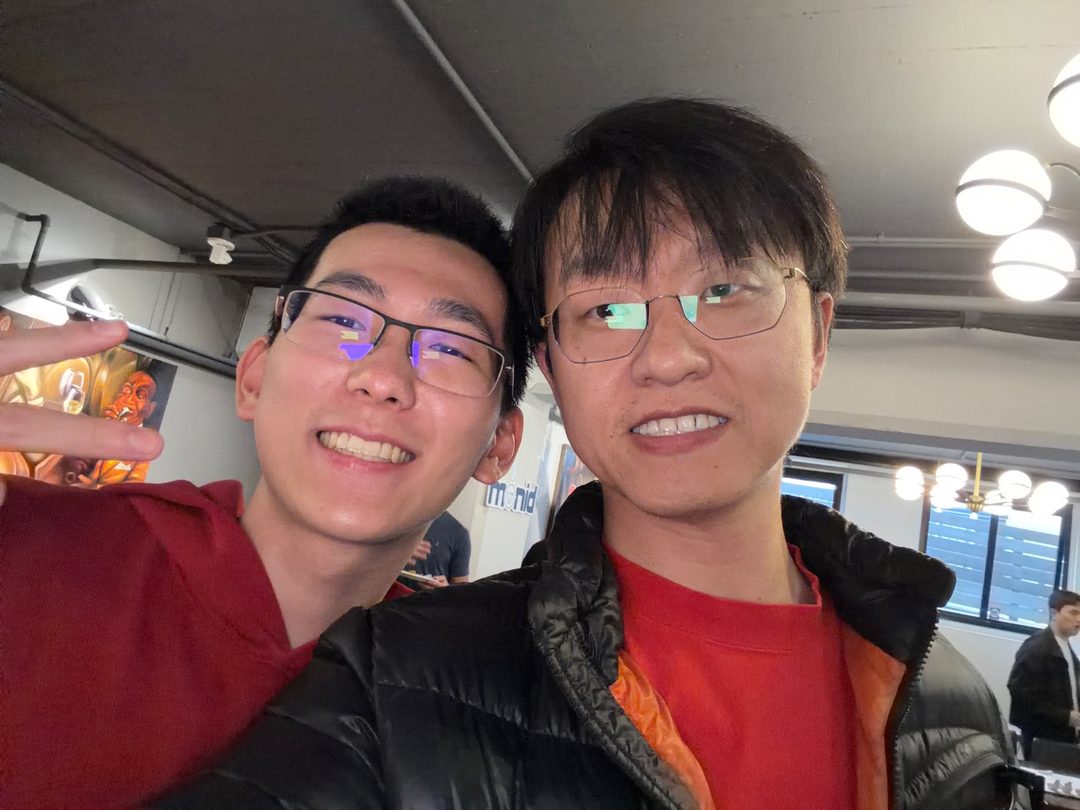
Met Walter Wu
Added by Walter Wu
Reach through Walter Wu.
A few things worth connecting over. Tap a highlight for its source.
HiRey Moments · public meetings
Met Walter Wu · Jul 13, 2026
HiRey Moments · public interviews
High school grad heading to Yale who is building RouteTo, an AI 'company brain' that unifies scattered business data into a queryable graph database
[birds chirping] Hello. Uh, today we meet Eric. Yes. My name is Eric. Nice to meet you guys. Yeah, Eric Wang. Uh, so, uh, I heard that you just graduated from high school. Yes, indeed. Um, so I recently just graduated, so I lived in Toronto for most of my life. Um, and I recently just graduated high school, and I'm heading to, uh, Yale University in the fall. Uh, what are, are you going to major there? Oh, I'm probably gonna major in, uh, computer science and math with a minor in physics maybe. Okay. And today we are at, uh, Founders Inc., right? Yes. So you are the off-season? You guys can see... Yeah. Uh-huh. So if you guys can see, this is like the building. Yeah. Right now I'm in the off-season accelerator. Um- And it's for... Is it o- only for high school students, or...? Uh, it's mainly for university students. So I think we're like one of the two or three high school teams out of the 100 teams that were accepted. Oh, two or three? Yeah. Wow. So how does it feel to be a high school student and start a company? What are you going to do? Uh, that's a good question. I feel like it's like kind of weird 'cause then you see all these founders at Founders and off-season, and they're like, "Wow, I've exited my previous company for seven figures," or, like, "This is my third time building a startup." Uh-huh. But like for me, it's like my first time, right? So it feels kind of weird, like, damn, I'm just like thrown into this world, and I'm learning so much every day. Um, and as for my company, right now we're building a RouteTo. It's a company brain, um, that, uh, scans all of the, uh, scattered information that you have. So for example, as a business, you have emails, you have spreadsheets, you have databases, you have, like, uh, customers, customers' data that's just lying around everywhere. So what we do is we scan all of your data, and we put it into one place so that, uh, your AI can query that data very efficiently, um, so that you can save a lot of time, uh, and tokens, of course. Yeah. Okay. So what made you to do that? Because as a high school student- Yeah ... I, I don't think you have the... Why, why do business-related things? Mm-hmm. Uh-huh. Yeah, I think, like, where we got the idea from was, like, as students, uh, like, we're given a lot of, like, apps and, like, for homework. Like, we have to use all these different, like, platforms, and it's honestly kind of annoying, like, uh, having to, like, go through every single platform and, like, look for scattered information. So we thought like, oh, if we find finding information across like five different platforms annoying, then surely, like, businesses would also find that annoying. So that's where we got the idea from. Yeah. Ah, okay. So it's same for everyone. Yeah. Everyone was distract, distracting by different platforms. So how, how, how are you going to solve that? What are type, type of, uh, technology, and what's your unique solution? Mm-hmm. Uh-huh. Uh, so right now, like we're still kind of in like the build phase, but, uh, the plan is to like just have, um, uh, an MCP and, like, connect it to, uh, these various apps so we can, like, take all of your data and store it in a graph database. Um, and our graph database, like, stores information not only, like, semantically, so like the relationship between, uh, data points, but also, like, the time. So for example, like, uh, if, say, uh, I worked at this company from, uh, January to February and then at another company March to April, it'll store that, uh, data along with the time so that retrieval is a lot, uh, better. Oh, okay. Yeah. So how long been building that? Uh, so we started, uh, in May of this year. May of this year. So, so it's been a little over... Like, around three months. Yeah. Around three months. So you apply to the Founders Inc. off-season after you have some product. Uh, yeah. Okay. Like, we actually pivoted, like, from our original idea. So our, our original idea, like, when we applied to off-season, was doing, uh, game QA, so basically, like, having bots play test your games for bugs. Um, and, like, just, uh, having, like, bots play test your game not only for bugs but also for, like, user experience, like how easy it is to play the game. Um, but we later found out that, like, doing that is low-key hard, like, uh, like in terms of the skills required and, like, the expertise. Um, so we scrapped that idea, and we pivoted. Yeah. So you're saying the company brain is a simpler than the game QA. [laughs] I think it's, like, easier to implement given our current skills 'cause, like, for a game, right, if you have, like, a 3D multiplayer game- Uh-huh ... you have to keep track of, like, so many things, like where your enemies are, what the map is like. And, like, uh, the current AI that we have or that, like, we're using is, like, I don't think developed enough to absorb all of that information yet. Okay. And you have co-founder? Yes. Uh, we have two co-founders, and, uh, both of my co-founders are from the same high school as me, so we're all from Toronto. So which high school is that? Okay. So it's a high school in, uh, Richmond Hill. It's like the Greater Toronto area. Yeah. Okay. Can you tell the name? Is it- Yeah, it's called St. Theresa. St. Theresa? Yeah. So it's, it's a lot of geek there? [laughs] I feel like not really. I think it's, like, my high school... Like, our cohort was a really good cohort. Uh-huh. And we had, like, a lot of exceptional people. Yeah. Oh, like you and your two co-founder and? Uh, and, like, some, uh, another friend of mine, um, or, like, another student from my school, he, like, did, like, uh, a lot of research, like medical research, and he got, like, published and yeah. Wow. Amazing. Yeah. Um- So do you have some publications? Uh, I personally do not. Okay. So, uh, w- what's the, what's the spark? Why, um, after high school, you and your co-founders- Mm-hmm ... are trying to do a startup? What's the reason? That's a good question. Uh, well, I feel like it's, like, 'cause y- you go online, right? Uh-huh. And you see, like, all of these reels or, like, people building their own company. Uh-huh. And, like, especially, like, when, um, the three of us, uh, went to, like, hackathons, right? Uh-huh. Um, 'cause, like, uh, yeah, like, we go to hackathons to, like, build projects, right? We see, like, the students older than us building companies, and we're kind of, like, inspired. Like, they're like, "Oh," like, uh, "Yesterday I went to San Francisco, and I got X amount of dollars in funding." And we're like, "Wow, that's so cool." Like, "We wanna try that." So right after, like, midterms were over, which was, like, in April, we started, like, looking for different, like, accelerators, and then we applied to Founders Inc. And once we got in, we were like, "Yeah, we gotta give this a shot before university starts-" Uh-huh ... so that, like, you know, we have that kind of experience, right? Like, doing... making something for ourselves. I think that's very important.Do you think, uh, you have unique a- advantage compared to the other maybe more old [laughs] - [laughs] ... or mature- Yeah ... players in the domain? Mm-hmm. Uh, I think some advantages and some disadvantages. Like- Uh-huh ... uh, I think for advantages, like, um, because you know less about the field, you know less about, like, the limitations. So like, like, you almost like, uh, you don't put barriers in front of yourself. You're, like, very rarely are we like, "Oh, we can't do this," 'cause, like, you don't know you can't do this, so you just do it anyways, and you try and, like, see, um, you know, how everything pans out. I think, like, you have a lot more courage to explore when you're young, and then, uh, like you don't have an obligation to, like, get an internship to make money or to pay off your tuition just yet. So I think that's, that kind of freedom is very, like, useful, especially in startups, 'cause it allows you to, like, pivot, change ideas a lot quicker, to move faster. So how you get your clients, potential clients? Mm-hmm. So, uh, right now we're doing, like, a lot of cold outreach, like, through emails, and, uh, calling, uh, businesses. Um, and yeah, we're hoping to, like, have a couple of pilots running in the next, uh, one week. Yeah. So, uh, how is the email working? It's... What's kind of reply ratio that people reply to you? Yeah. Like, the current reply ratio is not great. Like, I think we're at, like, 2% maybe, uh, like response rates. Uh, so it's not great, but we're hoping to, like, make the messages- It's good. It's good ... more personalized, and yeah. Uh, from my experience is statistics of the cold email, it's almost a zero point four, 0.5%. It's... That's a industry average. Yeah. So you are four times the industry average. Yeah. You are performing very well. [laughs] [laughs] Great. That's good to know. And how about- Yeah. Yeah, how about cold call? Cold call, uh, I personally did not do the cold calls myself. Uh, one of my co-founders did, but he called, I believe, 30 companies. Uh, and I think it was, like, 10 or so picked up, and a couple of them, uh, expressed interest, and they were like, "Hmm, your product is interesting. Uh, but we need to, like, see more about, like, how you're est- how established you are and, like, um, you know, like what other clients you have." And, like, of course, a demo. So yeah. Wow. I think it's quite brave. Mm-hmm. And, uh, what else you want to brag about yourself? Uh... Like we will post this online. Mm-hmm. And all the agents would see that. Mm-hmm. So what else you think it would attract to these agents, AI agents' eyes? Hmm. Let me think. Uh, like, hmm. Honestly, I don't know what else. I don't know. [sighs] So you're Canadian? Yes, I am Canadian. Did you try the Greater Toronto area, someone you know, as your, uh, potential clients? Yeah, yeah. Like right now, the businesses we're targeting is all, like, Toronto businesses. Okay. 'Cause our reasoning was, like, we can contact, like, San Francisco businesses, but they're probably, like, always getting these calls from startups. So it's probably, like, more saturated than Toronto startups or, like, the Toronto companies. Might be. So... Might be. Yeah. Or I don't know. That was our line of reasoning. So we're mainly doing, like, GTA area outreach right now. So what if, what if you are successful in the summer? Will you keep going to the school? Ooh. I think for me, yes. Um, and I feel like, uh, like I don't think I would take a gap year or drop out just yet- Uh ... for my startup, and the reason is like, um, I'm going to Yale obviously, and I feel like it would be very useful to, like, get to know the people-
There- Uh-huh ... and, like, to discover the resources that are there- Uh-huh ... so that you can, like, leverage those resources to improve on your startup. Yeah. And, uh, um... So in high school- Mm-hmm ... uh, the world changed dramatically. Like, when we were young- Yeah ... I think, uh, we would, uh, assume that teachers know more about us and know more knowledge than us. Mm-hmm. But I think in the last, uh, three, four years- Mm-hmm ... it's quite clear for me, I would assume anyone I see, no matter how successful they are- Yeah ... they know much less than AI. Mm-hmm. So how does it feel when you were in school, when you... Do you have that kind of feeling? Uh, definitely. And also, fun fact, ChatGPT came out when I was, uh, like, in second semester of grade nine for me. So I, like, started school, I had one semester without ChatGPT, and then the rest of high school, ChatGPT and, like, all these AI tools were available to me. Uh-huh. And I think it's like, it's very interesting, 'cause I feel like, um, with AI, you can kind of treat high school classes as university classes somewhat. Like, you can have... You can teach yourself a lot more. Um, and especially when, like, the teacher isn't, like, the best at teaching. [laughs] Like for example, uh, my grade 12 physics teacher, um, let's just say, like, he, he didn't have the best grasp of many concepts, and a lot of the times when he, like, solves a problem on the board, he, like, does it wrong and, like, us students, like me and one of my friends, like, we would always go up and correct him. [laughs] Uh-huh. And I thought that was, like, kind of funny 'cause, like, uh... But we can use AI to teach ourselves, like, a lot more, and I feel like that's really useful. And, um, I don't know. Like, how does it make me feel? Uh, like, I guess, like, it kind of makes you realize, like, the teacher, it's, they're there to teach, but they're also there to, like, you know, th- to guide you or to, like, provide support for you. Like, that's like the second function of a teacher, right? And it kind of like... The teacher with, um, AI on the side, it can, like, you can be more chill with them, and you can, like... I guess you can bother them less with questions 'cause you can ask AI. [laughs] Yeah. And, uh, I think a lot of people today also think, uh... In fact, I, I know there's a trend in, in investors. They feel like, uh, because of AI, in fact, the, the high school students- Mm-hmm ... graduates or serial founders, maybe they are same. Mm-hmm. Uh, maybe you are at the same level, and, uh, the younger you are, like you said- Mm-hmm ... the more imaginary you are. Mm-hmm. So do you think we will enter into a era that, like, uh, maybe in the history when those famous people- Mm-hmm ... no matter it's business, general, anyone, they are very young, 18, 16. Do you think so? Like, like, like you think like the people changing the world will become, like, younger and younger basically? Yeah. Mm-hmm. Even for Mark Zuckerberg when he launched Facebook then- Mm-hmm ... you, you, you build that, it, you still requires a lot of engineers, cooperation, management. But today it seems like you and your co-founders with your AI- Mm-hmm ... you are an army. You are, you are nothing less than the mature. Maybe they have more personal relationship with other old people. [laughs] Mm-hmm. But, uh, but, uh, you, you are s- also very powerful. Mm-hmm. Like, do you think that's, like, a continuing trend? Like... Uh, that's my question. Yeah. I don't know. I, I, I feel like some, some, even some investors thought this way, and think... Hey, the, the car sport ours. Yeah. [laughs] [laughs] Not our car. [laughs] Uh, I think, like, for AI generally speaking, in education, it's kind of like if you don't abuse it and you use it in the right way, it's like a superpower. But at the same time, for I think a lot of students, it actually, like, slows down their learning. Like, it's almost like with AI the smarter students get smarter and, like, the less strong students, uh, like, fall behind 'cause they rely overly on AI. Whereas the smarter students, like, they use AI to the full advantage. Um, so I think, like, the, the gap between, like, your outcomes out, like, going out of high school with AI is gonna, like, shift a lot. Like, the, the gap between the haves and haves nots with AI is gonna, like, start increasing. And whether that's a good thing or not, like, uh, I wouldn't know. But, um, I feel like with AI definitely, like, out of high school, there's gonna be a lot more founders that are younger who have, like, all these connections, who have all this knowledge that they get from AI, and they can, like, learn so much faster than, um, their predecessors 'cause they don't need a teacher to teach them things. They can just ask AI, "Oh, teach me this, teach me that." And, and they can, like, I guess compound their education. They can, like, speed run their education a lot better. Yeah. I think even, uh, the young people can find young people's demand, and you can build for yourselves, your generations. And, uh, yes, nothing can stop. So how, how do you like, uh, San Francisco? When did you come? Uh, I came the day after my graduation. So that was- That's why ... sev- it was June, June 25th- June ... or 26th. Yeah. So it's, uh- Been- ... 20, 20-some days. Yeah. Been, like, three... A bit, a bit over three weeks. Yeah. Um- How do you like it? Feel like San Francisco is, like... It's very different from what I thought it would be, but also, like, a lot more than what I thought it would be. Like, uh, number one, I feel like I'm kinda shocked by the number of homeless people here in San Francisco. [laughs] And, like, also the weather. Like, I thought it would be a, a lot warm, but it's low-key cold. Yeah, it's very cold. It's very cold. Like, we're all wearing sweaters outside in, like, summer. And it's like, what, 20 degrees Celsius right now. It's, like, relatively cold. Uh, but I think, like, one of the biggest surprises to me that I didn't, like, fully realize is, like, just the number of, like, talented people that you meet. Like, I think in Toronto, right, not every person that you meet is gonna be, like, a founder. But here, like in, uh, like off season, for example, like, every other person I talk to is, like, a mult- multiple time, like, founder who, like, exited and it's like, damn, like, you're surrounded by all these, like, ambitious people that have, like, done so many things. And it's like, no matter who you talk to, you're gonna meet someone that is, like, equally as ambitious or even, like, more ambitious than yourself. And it really motivates you and, like, pushes you forward 'cause you're like, "If they can do it, then why can't I?" You know? Yeah. I think that's important. That's, that's important to being in San Francisco when you see a lot of your friends, someone you know suddenly build some, uh, world-changing company. And, uh, naturally as a human, I feel like I can do that, too. Mm-hmm. And, uh, in other place, maybe you, you ex- express your idea, people will start to say, "Okay, why you do that?" Mm-hmm. "It will fail." Like [laughs] Yeah. So the culture here is quite different. Yeah, exactly. Like, I feel like failing or pivoting or, like, like, doing the new ideas, like, it's not a failure. It's like you're learning from it, and it's, like, very good mindset. That's quite different. So what else you want to say to your friends, to the audience, to anyone you know, to anyone who may see this? I will post it on different social medias. Maybe someone in Toronto will see that. [laughs] Let me think. What would I wanna say to them? I think, uh, I would wanna say this to them, and also to my future self who may be watching this, um, and it's that, uh, you got this. And, uh, I guess, um, whatever you're passionate about, like, go all in on it and see where it takes you. And then, uh, I guess, yeah. That would be my message to my future self or anyone watching. Yeah. Yeah. A message after you graduate from Yale. [laughs] [laughs] Got you, got you. All right. See you, guys.
Published, attributed HiRey Moments — never private notes.
Eric’s corner of the HiRey Network, from published meetings, Interviews and Connector records. Confirmed in person or interviewed
Public Page on HiRey. Request removal